

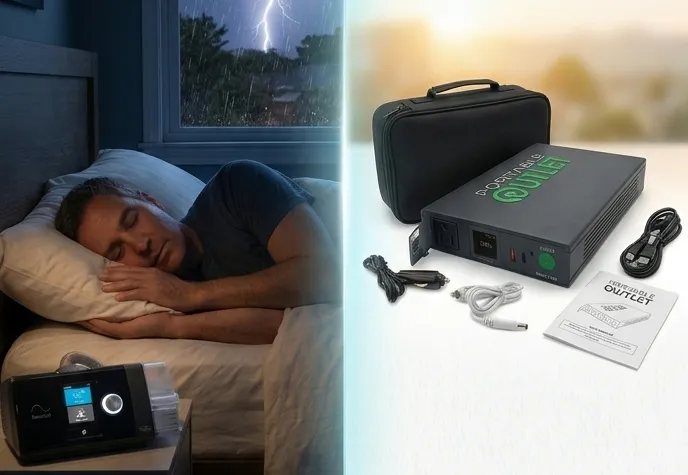
Chicago CPAP & Oxygen Backup Power for Severe Weather Outages
Over recent weeks, residents across Chicago, Evergreen Park, Oak Lawn, Chicago Ridge, Tinley Park, Orland Park, and Northwest Indiana have experienced a series of severe weather events that tested the resilience of our communities. Powerful thunderstorms, damaging winds, tornado watches and warnings, flash flooding, and widespread power outages have become an unfortunate reality across the region.
For most households, outages are an inconvenience, but for people using CPAP machines, BiPAP devices, oxygen concentrators, and other respiratory equipment, they can be much more serious. When power goes out unexpectedly, especially overnight, sleep therapy can be interrupted and oxygen equipment may stop working, creating urgent health concerns for patients who rely on daily respiratory support. That’s why emergency preparedness for CPAP and oxygen users goes beyond flashlights, batteries, and basic supplies; having a reliable backup power plan for medical equipment is essential.
Whether preparing for summer thunderstorms, winter ice storms, tornado-related outages, or other utility interruptions, a dependable backup power solution helps ensure uninterrupted therapy when it matters most.
Why Every CPAP User Should Have a Battery Backup for Power Outages
For the millions of Americans who rely on CPAP and BiPAP therapy to treat sleep apnea, a sudden power outage can stop treatment immediately. Many users wake up when airflow stops, while others may not realize their therapy has been interrupted until they feel the effects the next day.
One of the most common questions CPAP users ask is:
What happens if my power goes out while I’m sleeping?
The answer depends on whether you have a backup power solution in place.
A reliable CPAP battery backup system can help keep therapy running during an outage, providing uninterrupted treatment and valuable peace of mind during severe weather emergencies.
Not all backup power solutions are designed specifically for sleep therapy. When choosing a CPAP battery backup system, patients should look for a solution that provides automatic power during outages, supports their existing equipment, and offers enough runtime to last through an overnight emergency without requiring complicated setup or additional adapters.
Portable Outlet CPAP Battery Backup: Reliable Power When You Need It Most
Hayat Home Medical Equipment proudly offers the Portable Outlet CPAP Battery Backup System, one of the most innovative and reliable backup power solutions available for CPAP and BiPAP users.
The Portable Outlet CPAP Battery Backup System is designed to provide uninterrupted sleep therapy during power outages while remaining simple to use at home, during travel, or in emergency situations.
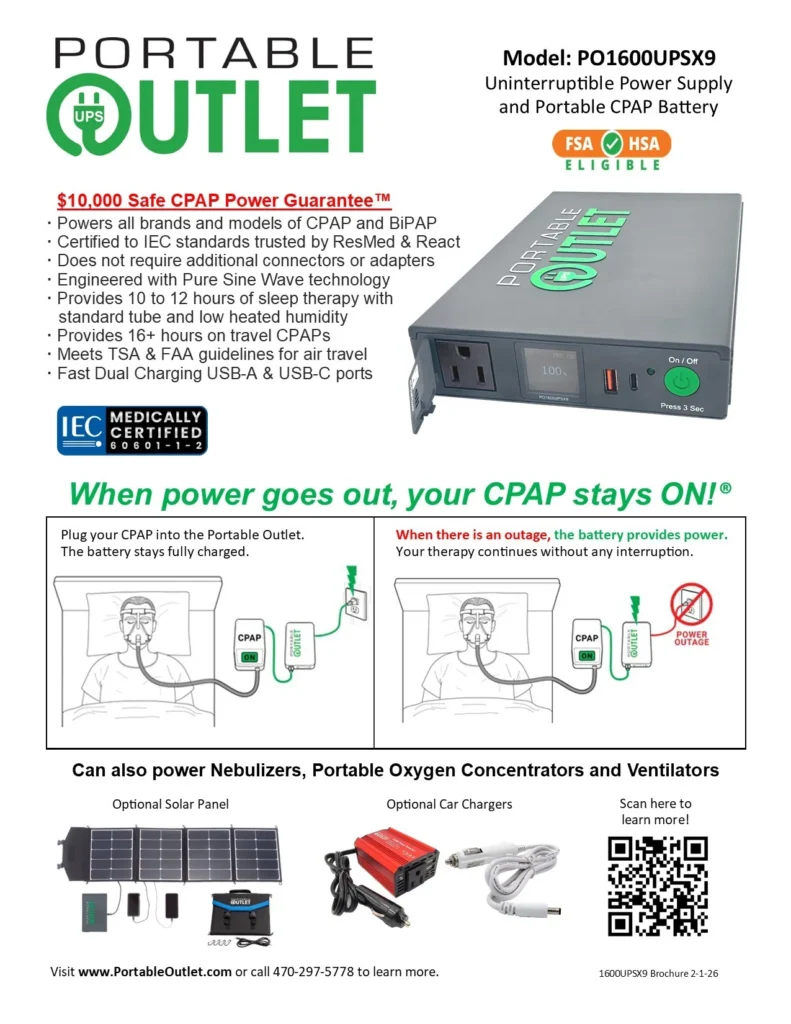
Key Benefits of the Portable Outlet Battery Backup System
- Powers virtually all CPAP and BiPAP devices for approximately 10 to 12 hours using low heated humidity settings
- Functions as an Uninterruptible Power Supply (UPS), automatically providing battery power during outages
- Does not require additional confusing adapters or connectors
- Uses Pure Sine Wave technology designed for sensitive medical equipment
- Allows patients to continue using their manufacturer’s original CPAP power supply
- Holds IEC Electronic Certification
- Backed by a $10,000 Safe CPAP Power Guarantee
Whether you’re preparing for severe weather, unexpected power outages, or travel, a dependable CPAP backup battery can help keep your therapy uninterrupted. If you’re in Evergreen Park, Chicago, or anywhere in the surrounding area, you can order the Portable Outlet CPAP Battery Backup System directly from Hayat Home Medical Equipment today. Don’t wait until the next outage to be unprepared.
Oxygen Patients Need an Emergency Preparedness Plan Too
Patients who rely on oxygen therapy face additional challenges during severe weather and power outages. Because oxygen concentrators require electricity to operate, having a backup plan is critical for maintaining safe and continuous oxygen therapy.
Emergency Preparedness Checklist for Oxygen Therapy Patients
- Maintain prescribed backup oxygen cylinders
- Know how to safely switch from a stationary oxygen concentrator to backup oxygen tanks
- Keep portable oxygen concentrators fully charged
- Consider purchasing additional backup batteries
- Contact your electric utility company and notify them that you are dependent on oxygen equipment
- If power restoration is expected to take longer than 24 hours, arrange transportation to a family member’s home, caregiver’s residence, hotel, or another location with reliable electrical service
Additional Tips for Oxygen Therapy Patients During Severe Weather
- Keep oxygen equipment in an easily accessible location
- Maintain an updated emergency contact list
- Know how long backup oxygen cylinders will last based on your prescribed flow rate
- Keep portable oxygen concentrator batteries fully charged during storm watches and warnings
- Discuss emergency preparedness plans with your healthcare provider and equipment supplier
Prepare Before the Next Storm Arrives
Severe weather can happen at any time, and power outages often occur with little warning. Taking steps now to prepare for an emergency can help protect your health, maintain uninterrupted therapy, and reduce stress when unexpected situations arise.
At Hayat Home Medical Equipment, we are committed to helping our patients stay safe, comfortable, and prepared with dependable home medical equipment and backup power solutions.
Chicago Storm Preparedness Checklist for CPAP and Oxygen Patients
Before severe weather arrives:
✅ Fully charge backup batteries
✅ Verify CPAP battery backup operation
✅ Charge portable oxygen concentrator batteries
✅ Maintain backup oxygen cylinders
✅ Keep flashlights available
✅ Monitor local weather alerts
✅ Store emergency contact information
✅ Notify your electric utility company if you depend on life-supporting medical equipment
✅ Review evacuation or relocation plans if prolonged outages are expected
What CPAP Users Should Know About Battery Runtime
When researching CPAP battery backups, many patients focus only on battery size. However, actual runtime depends on several factors, including machine settings and accessories.
Heated humidifiers and heated tubing generally consume more power than standard CPAP operation. During extended outages, some patients choose lower humidity settings to maximize runtime.
Patients concerned about overnight coverage should verify expected runtime before an emergency and keep backup batteries fully charged whenever severe weather alerts are issued.
Every patient’s therapy requirements are different, which is why it is important to discuss backup power options with a knowledgeable home medical equipment provider.
Why Many Patients Prefer an Uninterruptible Power Supply (UPS) for CPAP Therapy
Many CPAP users are surprised to learn that battery backup systems can do more than provide emergency power.
The Portable Outlet CPAP Battery Backup System functions as an Uninterruptible Power Supply (UPS), meaning it stays connected at all times while maintaining a charged battery.
If a power outage occurs during the night, the system automatically provides backup power without requiring the patient to wake up or reconnect equipment.
For patients who rely on consistent sleep therapy, this automatic protection can provide valuable peace of mind during severe weather events.
Prepare Today for Tomorrow’s Storms
Severe weather may be unpredictable, but your sleep therapy and oxygen treatment shouldn’t be. Taking a few simple steps today can help ensure you remain safe, comfortable, and prepared when storms, outages, or other emergencies occur.
Whether you rely on CPAP therapy, BiPAP treatment, oxygen equipment, or other respiratory devices, having a dependable backup power solution in place before you need it can provide valuable peace of mind for both patients and caregivers.
By preparing now, you can help protect your health, maintain uninterrupted therapy, and reduce stress when severe weather affects our Chicago-area communities.
Contact Hayat Home Medical Equipment
Have questions about CPAP battery backups, oxygen equipment preparedness, or other home medical equipment solutions?
Our team is here to help. Visit our Contact Us page or call us today to order or learn more about CPAP battery backup systems, oxygen therapy preparedness, and the home medical equipment solutions that can help keep you safe during severe weather and power outages.
📞 Phone: tel:+17084222300
📠 Fax: (708) 422-5966
✉️ Email: info@hhme.com
📍 3518 West 95th Street
Evergreen Park, IL 60805
🕒 Hours: Mon–Fri: 9 AM–5 PM | Sat: 10 AM–2 PM
Frequently Asked Questions About CPAP Battery Backups
How should I prepare my CPAP machine before a severe storm?
Before severe weather arrives, make sure your CPAP battery backup is fully charged and connected properly. It is also a good idea to test your backup system periodically so you understand how it operates before an actual emergency occurs. Many patients charge backup batteries whenever severe thunderstorm, tornado, or winter storm alerts are issued.
How much battery power do I need for a CPAP machine?
Battery runtime depends on your CPAP model, pressure settings, humidifier use, and whether heated tubing is enabled. In general, most patients preparing for weather-related outages are looking for enough power to cover a full night’s sleep. A battery backup system designed specifically for CPAP therapy can help provide reliable overnight coverage during unexpected outages.
Do heated humidifiers affect CPAP battery runtime?
Yes. Heated humidifiers and heated tubing typically consume more power than standard CPAP operation. During extended outages, some patients choose lower humidity settings to help extend battery runtime. Your actual runtime will vary depending on your therapy settings and equipment.
Can I use a CPAP battery backup while traveling?
Yes. Many CPAP users purchase backup power systems not only for severe weather preparedness but also for travel, camping, RV trips, and locations where reliable electricity may not be available. A portable battery backup can provide added peace of mind whether you’re at home or away.
Why do many CPAP users prefer a battery backup that functions as a UPS?
A battery backup with Uninterruptible Power Supply (UPS) capability automatically switches to battery power if electricity is lost. This means patients do not have to wake up, reconnect equipment, or manually switch power sources during an outage. For many users, this automatic protection is one of the most important features of a backup power system.
Should oxygen therapy patients have an emergency backup plan?
Absolutely. Patients who rely on oxygen concentrators should always have a plan in place for power outages. This may include maintaining prescribed backup oxygen cylinders, keeping portable oxygen concentrator batteries charged, notifying utility providers of medical equipment dependence, and identifying an alternative location with reliable power if an outage is expected to last an extended period.
Who should consider a CPAP battery backup system?
Anyone who relies on CPAP or BiPAP therapy can benefit from having a backup power solution available. This is especially important for patients living in areas prone to thunderstorms, tornadoes, winter storms, utility outages, or other severe weather events throughout Chicago, Evergreen Park, Oak Lawn, Chicago Ridge, Tinley Park, Orland Park, and Northwest Indiana.