

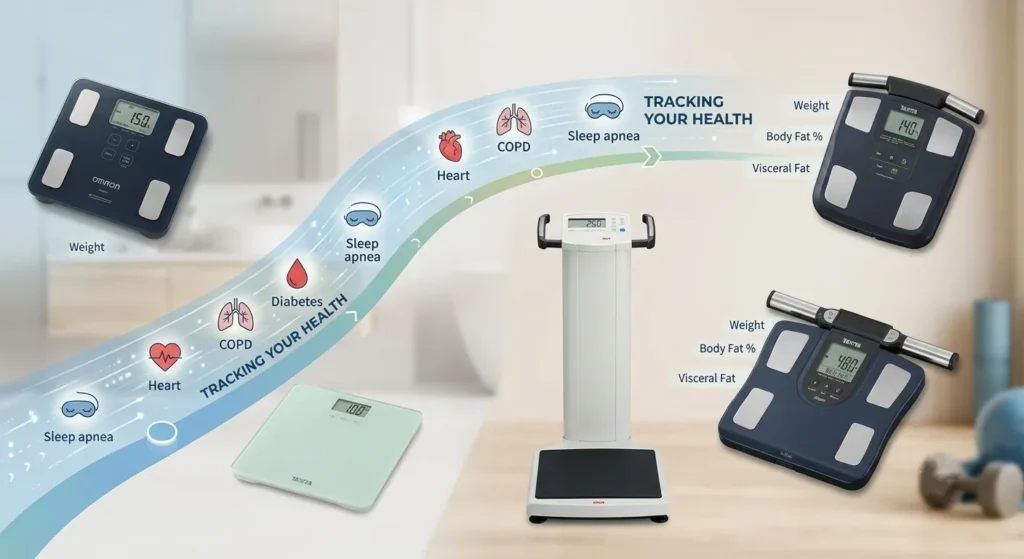
Maintaining a healthy weight is more than just a number on a scale. It’s one of the easiest and most important ways to keep an eye on your overall health. Whether you’re managing COPD, diabetes, sleep apnea, heart disease, or another chronic condition, tracking your weight regularly can reveal changes in your health early and help your healthcare provider make informed treatment decisions.
At Hayat Home Medical Equipment (HHME), we believe proactive health monitoring starts at home. That’s why we carry more than 30 different weight scales and measurement tools built to meet the needs of every patient and family.
Why Is Monitoring Your Weight So Important?
Weight changes can be one of the earliest signs that something in your body is shifting. Regular monitoring helps identify fluid retention, unexpected weight gain or loss, changes in nutrition, medication side effects, and progress toward healthy lifestyle goals. Share any significant changes with your healthcare provider so they have the full picture.
COPD and Weight Monitoring
People living with COPD may experience unintentional weight loss, muscle loss, poor nutrition, or weight gain from reduced activity or certain medications. Since breathing itself can burn more energy than expected for many COPD patients, weight swings in either direction are worth tracking closely and reviewing with your respiratory specialist. If you’re also managing oxygen therapy at home, keeping a simple weight log alongside your oxygen levels gives your care team a clearer, more complete picture at every visit.
Diabetes and Weight Management
Maintaining a healthy weight is a core part of diabetes management. Regular weight monitoring helps you track progress, evaluate lifestyle changes, and understand how your medications are working, all information worth bringing to your next appointment. Pairing consistent weigh-ins with your regular blood glucose monitoring or diabetic testing supplies gives you a fuller, more accurate view of how your body is responding over time, not just day to day.
Sleep Apnea and Weight
Weight can directly influence obstructive sleep apnea and how well your CPAP therapy works. Significant weight changes may affect mask fit, seal, and comfort, along with sleep quality overall. If you notice your CPAP mask isn’t fitting the way it used to, a recent weight change is often the reason, and it’s worth mentioning to your sleep specialist before assuming the mask itself is the problem.
Choosing the Right Weight Scale
Not every household needs the same type of scale, and the right one often depends on the condition you’re managing and who’s using it day to day.
- Digital weight scales for simple, everyday home tracking
- Talking scales for individuals with visual impairments, offering audible readouts for independent use
- Anti-slip safety platforms, a smart choice for older adults or anyone managing balance issues alongside a chronic condition
- High-capacity bariatric scales supporting up to 550 pounds, built for accuracy at higher weight ranges
- Remote and large-display scales with easy-to-read numbers, ideal for anyone with low vision or reduced mobility
- Chair scales and wheelchair scales for patients who can’t safely stand on a standard platform
Shop Online From the Comfort of Home
Browse our full selection of more than 30 weight scales and measurement products, including professional and medical-grade scales and height measurement tools, by visiting our online store. Order today and have your new weight scale delivered directly to your doorstep.
Hayat Home Medical Equipment Is Here to Help
Whether you need a reliable weight scale, CPAP supplies, diabetic care products, mobility equipment, or respiratory solutions, patients throughout Chicago and the surrounding suburbs trust our knowledgeable team to help find the right products for their needs, not just sell something off a shelf.
Not sure which scale fits your situation? Reach out to our team today for personalized guidance.
Disclaimer: This article is intended for educational purposes only and should not replace medical advice from your physician or other qualified healthcare professional. Always consult your healthcare provider regarding unexplained weight changes, chronic disease management, or any concerns about your health.
Frequently Asked Questions
How often should I weigh myself if I’m managing a chronic condition like COPD or heart disease?
Many physicians recommend daily weigh-ins for conditions where fluid retention is a concern, such as heart failure, while weekly tracking may be sufficient for general COPD or diabetes management. Ask your physician what frequency makes sense for your specific condition.
Does insurance cover the cost of a home weight scale?
Most standard home weight scales are considered a cash-and-carry item and are typically not covered by Medicare or private insurance, though certain specialty scales prescribed for specific medical monitoring may qualify for coverage in some cases. Our team can help you understand what applies to your situation.
What’s the difference between a bariatric scale and a standard digital scale?
Bariatric scales are built with a larger platform and reinforced frame to safely and accurately weigh individuals up to 550 pounds, while standard digital scales typically max out around 300 to 400 pounds and may lose accuracy near their upper limit. Choosing the right capacity matters for both safety and reliable readings.
Can I sync my weight scale data with a telehealth appointment or my physician’s office?
Some higher-end digital scales offer Bluetooth or app connectivity that allows you to share readings electronically with your care team, while simpler models require you to log and report readings manually. Ask our team which models in our catalog support digital sharing if that’s a feature you want.
How do I know if a weight change is significant enough to call my doctor?
As a general guideline, many physicians consider a gain or loss of two to three pounds in a single day, or five pounds or more in a week, worth reporting, especially for patients managing heart disease or COPD. Your physician can give you thresholds specific to your condition and treatment plan.